Why Women Over 40 Experience Bladder Leaks When Laughing or Sneezing (It’s Not Just "Weak Muscles")
For decades, women were told that postpartum or midlife leaks were simply the price of aging, solved only by awkward pelvic exercises or panty liners. New urological research reveals a hidden cellular driver: the breakdown of the urinary microbiome.

Dr. Sterling, MD
Clinical Investigation Team · Published September 2026
If you find yourself crossing your legs when you cough, planning shopping trips around restroom locations, or feeling a sudden, uncontrollable urge the moment you insert your key into the front door, you are not alone.
The Kegel Myth: Why Squeezing Often Fails
When a woman mentions bladder urgency or minor leaks to her physician, the universal prescription has historically been: "Do more Kegels." While pelvic floor muscle tone is important for structural stability, over 62% of women who perform daily Kegels report no significant reduction in accidental leakage.
Why? Because involuntary bladder leaks (urge incontinence and mixed incontinence) do not originate in skeletal muscles. They originate inside the urothelium—the ultra-sensitive mucosal lining of the bladder wall.
The True Culprit: The Breakdown of the Urinary Microbiome
Until 2012, medical textbooks taught that healthy urine was completely sterile. Cutting-edge DNA sequencing proved this wrong: the bladder possesses its own rich microbiome, predominantly populated by protective Lactobacillus colonies.
This microscopic layer forms a physical and biochemical armor against micro-crystals, acid spikes, and environmental toxins known as dioxins. After age 40, three specific factors cause this protective shield to collapse:
- 1. Estrogen Decline: Estrogen maintains thick, resilient urothelial tissue. As perimenopause begins, thinning walls expose sensitive sensory nerves.
- 2. Toxic Environmental Dioxins: Modern water and food supplies contain micro-pollutants that accumulate in bladder tissue, triggering chronic micro-spasms.
- 3. Microbiome Depletion: Loss of protective bacterial colonies permits opportunistic irritants to trigger false "emergency full" signals to the brain.
How to Restore Natural Bladder Resilience
Stopping accidental leaks requires a three-step protocol: soothing hyperactive sensory nerves, neutralizing tissue toxins, and re-inoculating the urothelial barrier with targeted phytonutrients.
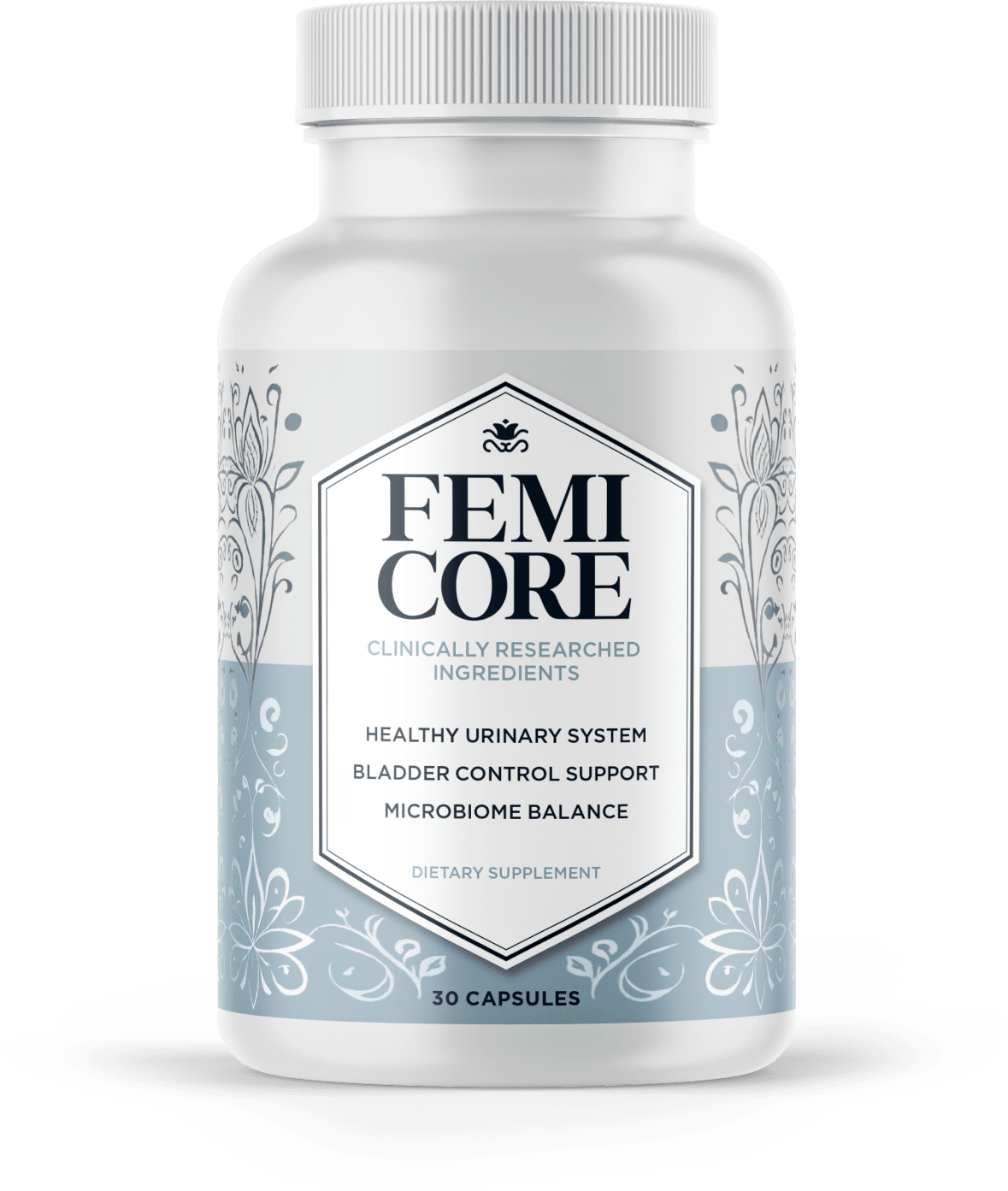
FemiCore: The First Urinary Microbiome & Dioxin Defense Formula
FemiCore is the only natural protocol engineered to target the underlying urinary microbiome imbalance and flush toxic dioxins. Its clinically calibrated blend restores urothelial thickness, calms involuntary bladder contractions, and restores dry, worry-free confidence.