
You're in the middle of a sentence and the word vanishes. You walk into the kitchen and have no idea why. You're introduced to someone and their name disappears before you've finished shaking hands. You're sharp — you know you're sharp — and yet something is different from five years ago.
These moments aren't random, and they're not imaginary. They reflect specific, measurable biological changes that begin accelerating in the brain during the fifth decade of life. The good news is that most of these changes are partially modifiable — if you understand what's driving them.
Three Biological Processes Behind Age-Related Memory Decline
Cognitive decline after 40 isn't one thing — it's the compound effect of three distinct processes happening simultaneously:
First: neuroinflammation. The brain contains specialized immune cells called microglia. In a healthy brain, microglia are surveillance cells — they patrol neural tissue, clear debris, and support synaptic maintenance. When chronically activated by poor sleep, high-sugar diets, stress, or systemic inflammation, microglia shift into a pro-inflammatory state, releasing cytokines that impair synaptic plasticity — the brain's ability to strengthen connections between neurons that underlies learning and memory.
Second: declining neurogenesis. For most of the 20th century, scientists believed the adult brain couldn't grow new neurons. We now know the hippocampus — the brain region most critical for forming new memories — does generate new neurons throughout life. But this neurogenesis slows significantly after 40, reducing the brain's capacity to encode new information and form durable memories.
Third: neurotransmitter decline. Acetylcholine — the primary neurotransmitter of memory and attention — decreases with age, particularly in the circuits connecting the hippocampus and prefrontal cortex. Dopamine, which drives motivation and working memory, also declines. The result is a brain that processes more slowly, retains less, and tires more quickly from cognitive effort — not because it's broken, but because its chemical signaling system is depleted.
Clinical Insight
A 2022 review in Nature Aging found that neuroinflammation — not neuron loss — is the primary driver of early cognitive decline in adults over 40. The researchers concluded that interventions targeting microglial activation and synaptic inflammation show the most promise for preserving cognitive function in midlife.
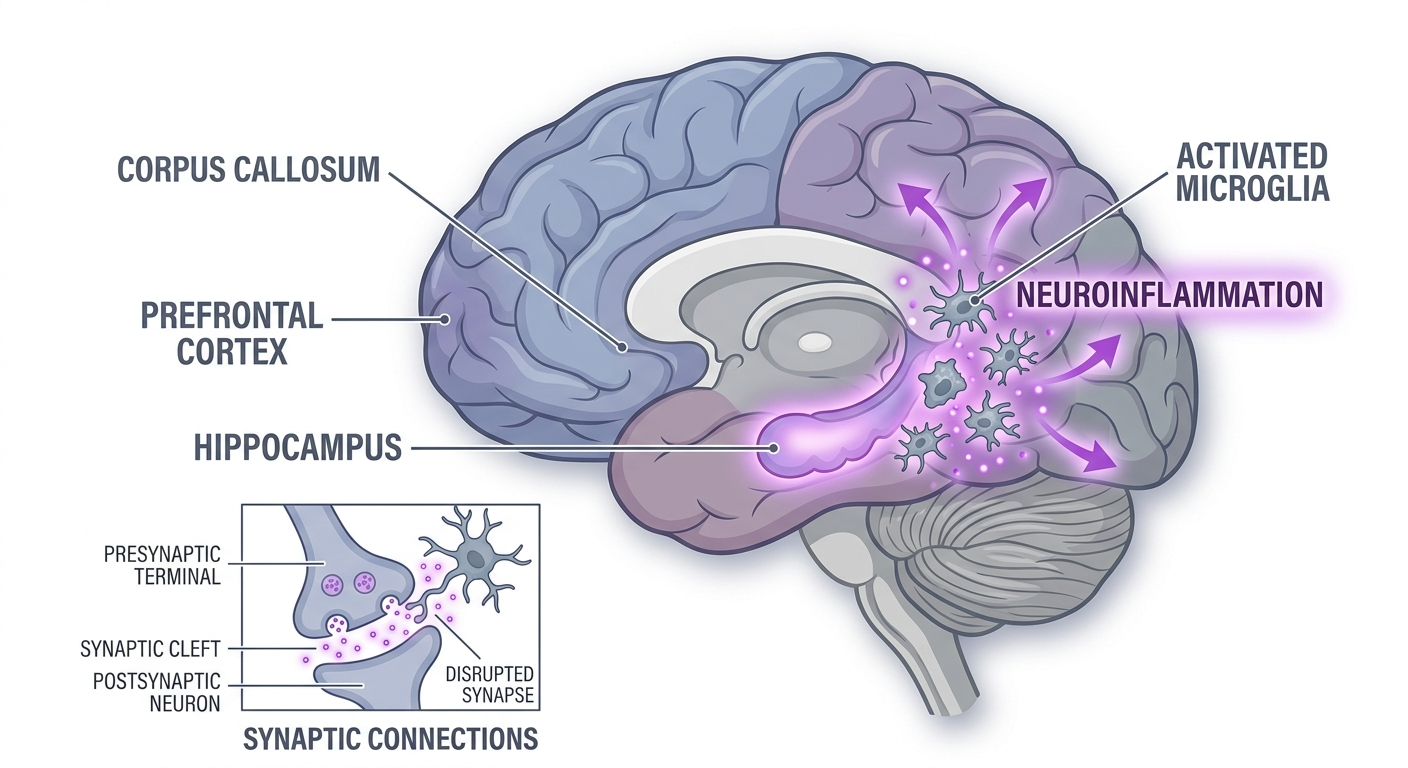
The hippocampus — the brain's memory center — is the region most vulnerable to age-related neuroinflammation and neurogenesis decline.
5 Signs Your Brain Is Under Cognitive Stress
These signs are easy to dismiss individually — but together, they paint a consistent picture of early cognitive decline worth taking seriously:
Tip-of-the-tongue moments that happen more frequently
The word is there — you can almost feel its shape — but it won't surface. These tip-of-the-tongue failures increase measurably with age and reflect slowing in the retrieval pathways between semantic memory (knowing the word exists) and phonological memory (accessing its sound). They're frustrating precisely because the underlying knowledge is intact; it's the retrieval mechanism that's slowing.
Difficulty holding multiple pieces of information at once
Working memory — the mental workspace where you hold information temporarily while using it — shrinks with age. Tasks that once felt effortless, like mental arithmetic, following a complex conversation, or keeping track of multiple threads of a project, require more effort and produce more errors. This is one of the earliest and most consistently measured cognitive changes after 40.
Taking longer to learn new skills or adapt to new technology
Processing speed — how fast the brain takes in, evaluates, and responds to new information — declines measurably beginning in the mid-30s and accelerates after 50. This doesn't reflect a reduction in intelligence; it reflects slower signal transmission in neural circuits with less myelin integrity and fewer active synapses.
Mental fatigue after tasks that used to feel effortless
When the brain's energy metabolism becomes less efficient — due to mitochondrial decline in neurons, reduced cerebral blood flow, or chronic neuroinflammation — sustained cognitive effort depletes neural resources faster. People notice this as a kind of cognitive tiredness: the inability to concentrate for as long as they used to, particularly in the afternoon.
Sleep quality decline correlating with memory problems
During deep slow-wave sleep, the brain's glymphatic system — a waste-clearance network — flushes out metabolic byproducts including beta-amyloid, the protein that accumulates in Alzheimer's disease. Poor sleep, which becomes more common after 40, means less clearance, more accumulation, and accelerating cognitive burden. This bidirectional relationship between sleep and memory is one of the most important and underappreciated connections in neuroscience.
6 Evidence-Backed Strategies to Protect and Sharpen Your Brain
The brain retains significant plasticity well into later life. These interventions have the strongest evidence for slowing cognitive decline and, in some cases, measurably improving function:
Aerobic exercise — the single most powerful brain intervention
Exercise directly increases BDNF (brain-derived neurotrophic factor) — the brain's primary growth and maintenance protein, sometimes called "Miracle-Gro for the brain." BDNF stimulates hippocampal neurogenesis, strengthens synaptic connections, and reduces neuroinflammation. Studies consistently show that adults who exercise aerobically for 150 minutes per week have significantly larger hippocampal volume and better memory scores than sedentary peers of the same age. No supplement, drug, or dietary strategy comes close to exercise in terms of evidence strength.
Prioritize 7–9 hours of sleep — non-negotiably
The glymphatic system operates almost exclusively during deep sleep, clearing the neural waste that accumulates during waking hours. Chronic short sleep (under 6 hours) measurably accelerates beta-amyloid accumulation. Sleep is not rest — it is active brain maintenance. Improving sleep quality through consistent sleep timing, a dark and cool room, and eliminating alcohol (which fragments deep sleep despite inducing sleep onset) can produce noticeable cognitive improvements within weeks.
Adopt a Mediterranean or MIND diet pattern
The MIND diet — a hybrid of the Mediterranean and DASH diets specifically optimized for brain health — reduced Alzheimer's risk by up to 53% in adherent participants in a large Rush University study. Its key elements: leafy greens daily, berries twice a week (particularly blueberries, which contain anthocyanins that cross the blood-brain barrier), fatty fish twice a week, olive oil as the primary fat, and minimizing red meat, butter, and ultra-processed foods. The anti-inflammatory profile of this diet directly targets microglial activation.
Engage in cognitively demanding novelty
The brain builds cognitive reserve — a buffer against decline — through learning new skills, not by repeating familiar ones. Crossword puzzles, while enjoyable, don't build significant reserve because they're familiar challenge patterns. Learning a new language, instrument, craft, or complex skill forces neuroplasticity in ways that strengthen the very circuits used for memory and attention. The evidence strongly favors novelty over repetition for maintaining cognitive resilience.
Manage stress and lower cortisol load
Cortisol — the primary stress hormone — is directly neurotoxic to the hippocampus at chronically elevated levels. It suppresses neurogenesis, damages dendritic connections between neurons, and promotes microglial activation. Mindfulness meditation, even 10 minutes daily, produces measurable reductions in cortisol and measurable increases in gray matter density in the prefrontal cortex within 8 weeks of consistent practice. This is not soft science — it's some of the most replicated neuroscience of the past two decades.
Optimize omega-3 intake — especially DHA
DHA (docosahexaenoic acid) makes up approximately 30% of the brain's gray matter by weight. Low DHA status is associated with smaller brain volume, faster cognitive decline, and higher dementia risk. Most adults in Western diets are significantly below optimal DHA levels. Two to three servings of fatty fish weekly (salmon, sardines, mackerel, herring) or a daily omega-3 supplement providing at least 1g of DHA can measurably improve memory performance and slow age-related brain volume loss.
The Case for Targeted Nootropic Supplementation
Lifestyle is the foundation. But several plant compounds have accumulated genuinely impressive clinical evidence for supporting the specific mechanisms — neurogenesis, acetylcholine signaling, and neuroinflammation — that drive age-related cognitive decline:
Lion's Mane Mushroom (Hericium erinaceus)
Stimulates the production of Nerve Growth Factor (NGF), a protein that supports the growth and maintenance of neurons. A 2009 double-blind trial showed significant improvements in cognitive function scores in adults with mild cognitive impairment after 16 weeks. Unique among nootropics in its direct neurogenic mechanism.
Bacopa monnieri
An Ayurvedic herb with multiple randomized controlled trials showing improvements in memory formation speed, recall accuracy, and processing speed. Works by enhancing synaptic communication through increased dendritic branching and supporting serotonin and acetylcholine neurotransmission. Effects build over 8–12 weeks of consistent use.
Phosphatidylserine
A phospholipid that makes up 15% of total brain lipids and is critical for cell membrane integrity and neurotransmitter receptor function. The FDA allows a qualified health claim for phosphatidylserine and reduced risk of cognitive decline. Multiple studies show improvements in memory, concentration, and word-finding in adults over 50.
Ginkgo biloba
Improves cerebral blood flow and has antioxidant effects in neural tissue. Most clinically relevant for processing speed and attention in adults with early cognitive decline. The 240mg standardized extract used in most trials is significantly more potent than typical over-the-counter doses.
Clinical Recommendation
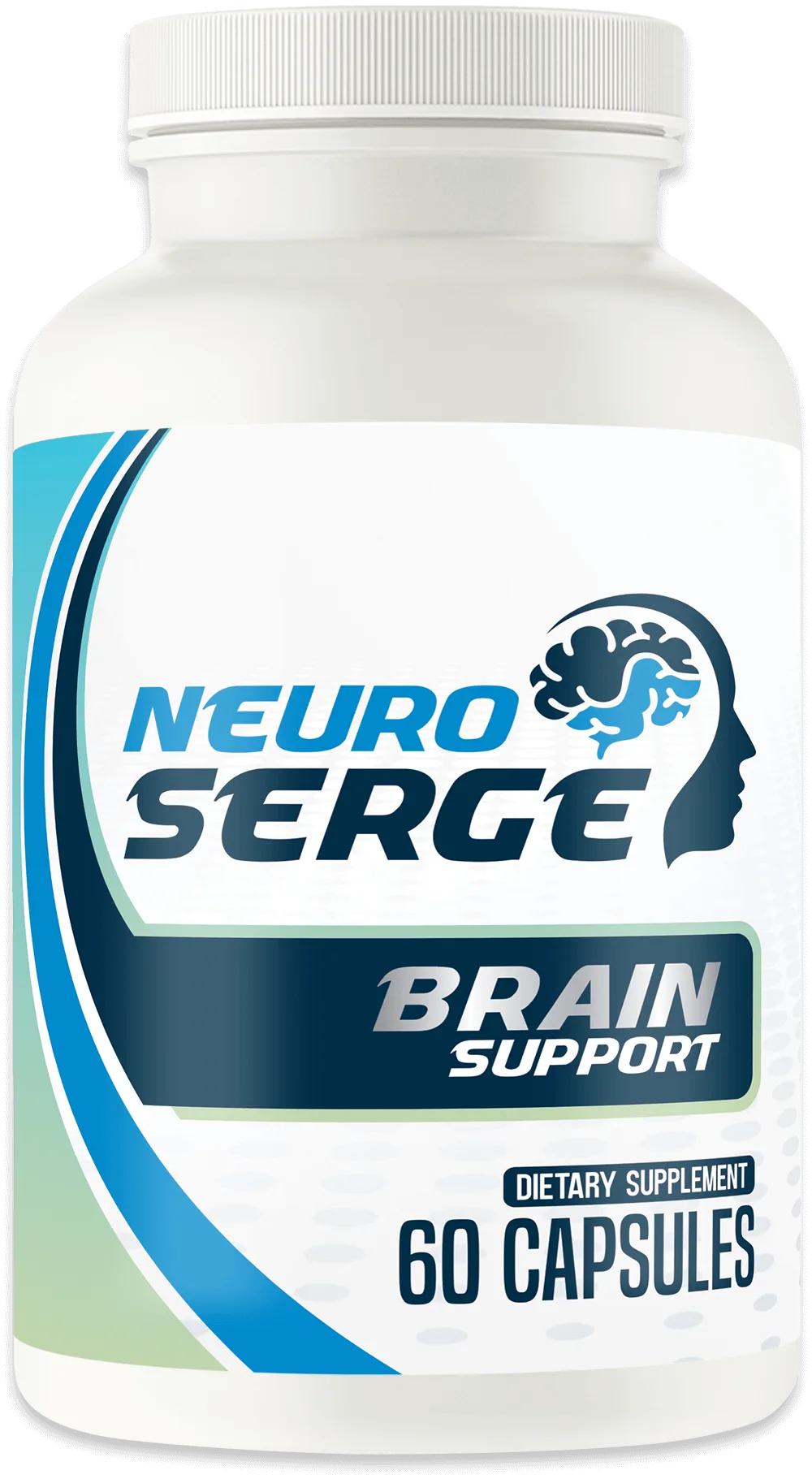
Neuro Serge: Cognitive Support Formulated for Adults Over 40
Neuro Serge combines Lion's Mane, Bacopa monnieri, Phosphatidylserine, and Ginkgo biloba — a stack targeting neurogenesis, acetylcholine signaling, and cerebral blood flow simultaneously. It's the formula we've reviewed that most comprehensively addresses the three biological mechanisms driving age-related memory decline described in this article.
Disclosure: MD Clinical Reports earns a commission if you purchase through our links, at no extra cost to you. We only recommend products we have independently reviewed.