
You brush twice a day. You floss. You use mouthwash. And yet — every morning, you spit a little pink into the sink. Your dentist says "brush more gently," you try that, and nothing changes.
Here's what no one is telling you: bleeding gums are not primarily a mechanical problem. They are a microbial problem. The answer isn't in your toothbrush — it's in the invisible ecosystem living inside your mouth.
The Real Culprit: Bacterial Imbalance in Your Mouth
Your mouth is home to over 700 species of bacteria. Most of them are harmless — or even actively beneficial. They form a protective layer on your teeth and gums, crowd out pathogens, and help regulate inflammation.
The problem starts when this balance tips. Modern diets high in sugar and processed foods feed the harmful species. Alcohol-based mouthwashes kill bacteria indiscriminately — good along with bad. Antibiotics wipe out beneficial strains. Chronic stress raises cortisol, which suppresses the immune response that keeps bad bacteria in check.
When harmful bacteria — particularly species like Porphyromonas gingivalis and Fusobacterium nucleatum — colonize the gum line, they release toxins that trigger a chronic inflammatory response. That inflammation is what makes your gums bleed. No amount of extra brushing will fix it because the infection is biological, not mechanical.
Clinical Insight
A 2023 NIH-published review found that the composition of the oral microbiome was a stronger predictor of gum disease progression than brushing frequency or dental visit regularity — underscoring that the microbial environment matters more than the habits most people focus on.
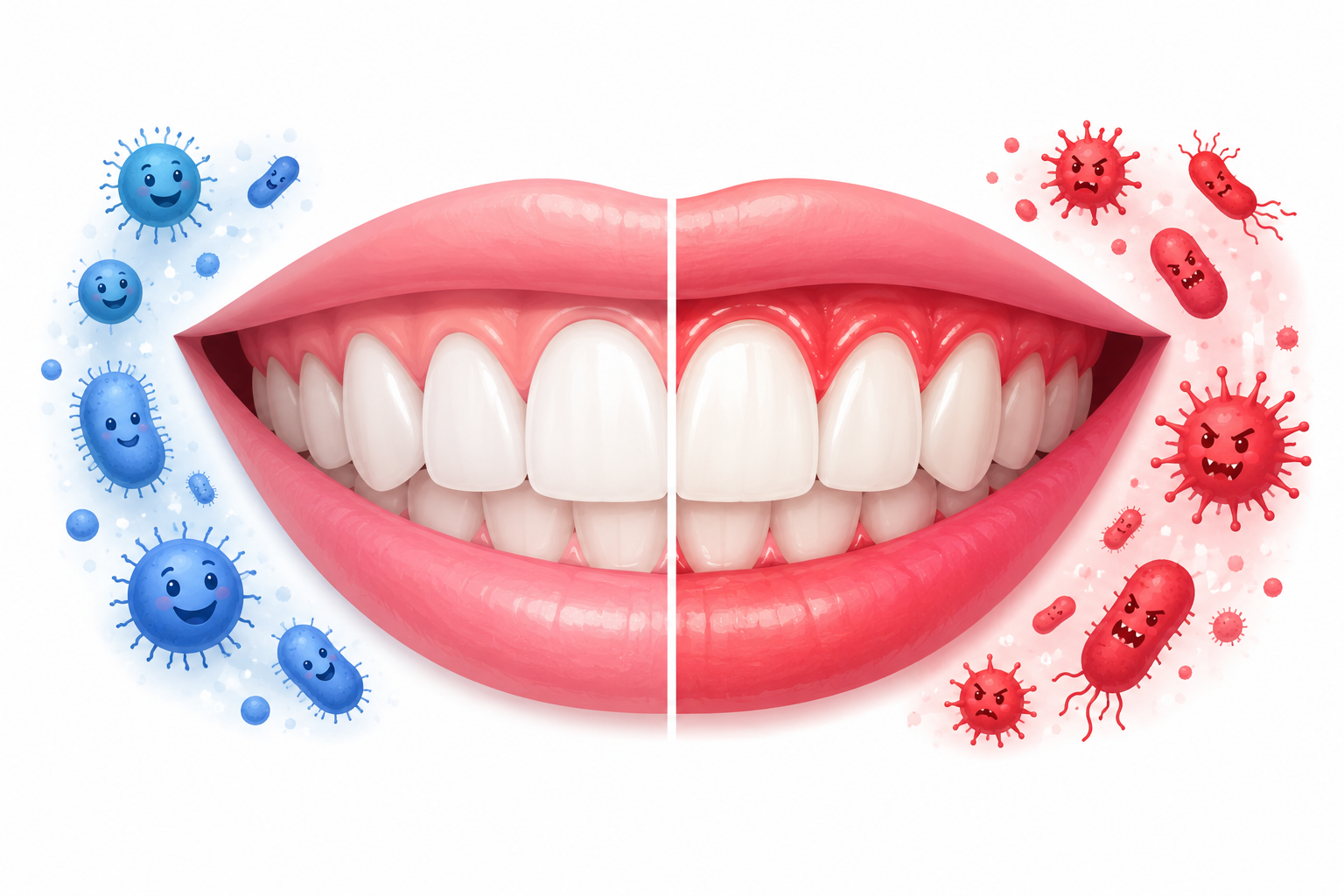
A balanced oral microbiome keeps harmful species in check. When balance is lost, inflammation follows.
5 Signs Your Oral Microbiome Is Out of Balance
Bleeding gums are usually the most visible sign — but not the only one. Watch for these other signals:
Persistent bad breath, even right after brushing
Halitosis is almost always caused by sulfur-producing bacteria living deep in the gum pockets and on the tongue's surface — not by food particles. If mints and mouthwash provide only temporary relief, bacterial overgrowth is the root cause.
Gums that look red, puffy, or feel tender
Healthy gums are pale pink and firm. Redness and swelling are the immune system's response to bacterial toxins at the gum line — a sign that the inflammatory process is already active.
Teeth that feel increasingly sensitive
Bacterial acids erode enamel and cause gum recession over time, exposing the sensitive dentin layer underneath. Sensitivity to cold or sweet foods often signals long-term bacterial damage.
A white or yellow film on your tongue in the morning
Tongue coating is a biofilm of bacteria that accumulates overnight. Its presence — especially with a strong odor — indicates significant bacterial overgrowth that brushing alone cannot address.
Frequent cavities despite good hygiene
If you brush and floss correctly but still develop decay, the issue is the bacterial environment — specifically the overabundance of Streptococcus mutans, the primary cavity-causing species, which thrives when beneficial bacteria are absent.
5 Evidence-Backed Habits That Actually Help
The goal isn't to kill all bacteria in your mouth — it's to shift the balance back toward the beneficial species. These strategies directly support that outcome:
Switch to an alcohol-free mouthwash
Alcohol-based rinses are indiscriminate — they reduce total bacterial count, but they wipe out beneficial species alongside harmful ones. An alcohol-free formula (look for cetylpyridinium chloride or stabilized chlorine dioxide) disrupts biofilm without collateral damage to your protective microbiome.
Add a saltwater rinse morning and night
Dissolve ½ teaspoon of sea salt in a cup of warm water and swish for 30 seconds. Salt creates an alkaline environment that neutralizes bacterial acids and reduces gum inflammation without disrupting microbiome balance. Clinical studies show regular saltwater rinsing reduces gingival bleeding within 2 to 4 weeks.
Cut sugar and ultra-processed foods for 30 days
Harmful oral bacteria metabolize sugar to produce the acids that erode enamel and the toxins that inflame gums. Removing their primary fuel source creates conditions where beneficial bacteria can reestablish dominance. This single change often produces noticeable improvement in gum sensitivity within weeks.
Use a tongue scraper every morning
Up to 80% of the bacteria responsible for bad breath and oral inflammation live on the tongue's surface, not between teeth. Brushing the tongue spreads bacteria around; scraping removes the biofilm entirely. Use a metal or silicone scraper from back to front, 5 to 7 strokes, before anything else in your morning routine.
Eat more fermented foods and leafy greens
Yogurt, kefir, raw sauerkraut, and kimchi deliver live bacterial cultures that compete with harmful oral species. Dark leafy greens provide vitamin K2, which research links to reduced periodontal inflammation. These are not miracle cures, but they actively contribute to the microbial environment that keeps gums healthy.
The Missing Piece: Why Oral Probiotics Matter
The habits above help shift the environment. But for people with persistent gum problems, diet and hygiene alone often aren't enough to fully recolonize the mouth with beneficial bacteria — especially if years of imbalance have allowed pathogenic species to entrench.
This is where targeted oral probiotics become relevant. Unlike gut probiotics (which are designed for the intestinal tract and largely don't survive in the mouth), oral probiotics deliver bacterial strains specifically selected for the oral environment.
Several strains have demonstrated measurable results in controlled trials:
Lactobacillus reuteri
Reduces pro-inflammatory cytokines in gum tissue; clinically shown to decrease bleeding on probing in periodontal patients.
Lactobacillus paracasei
Inhibits the adhesion of Streptococcus mutans to tooth enamel; supports the integrity of the protective bacterial film on teeth.
B. lactis BL-04®
Strengthens mucosal immunity in the mouth and upper respiratory tract; reduces susceptibility to oral infections.
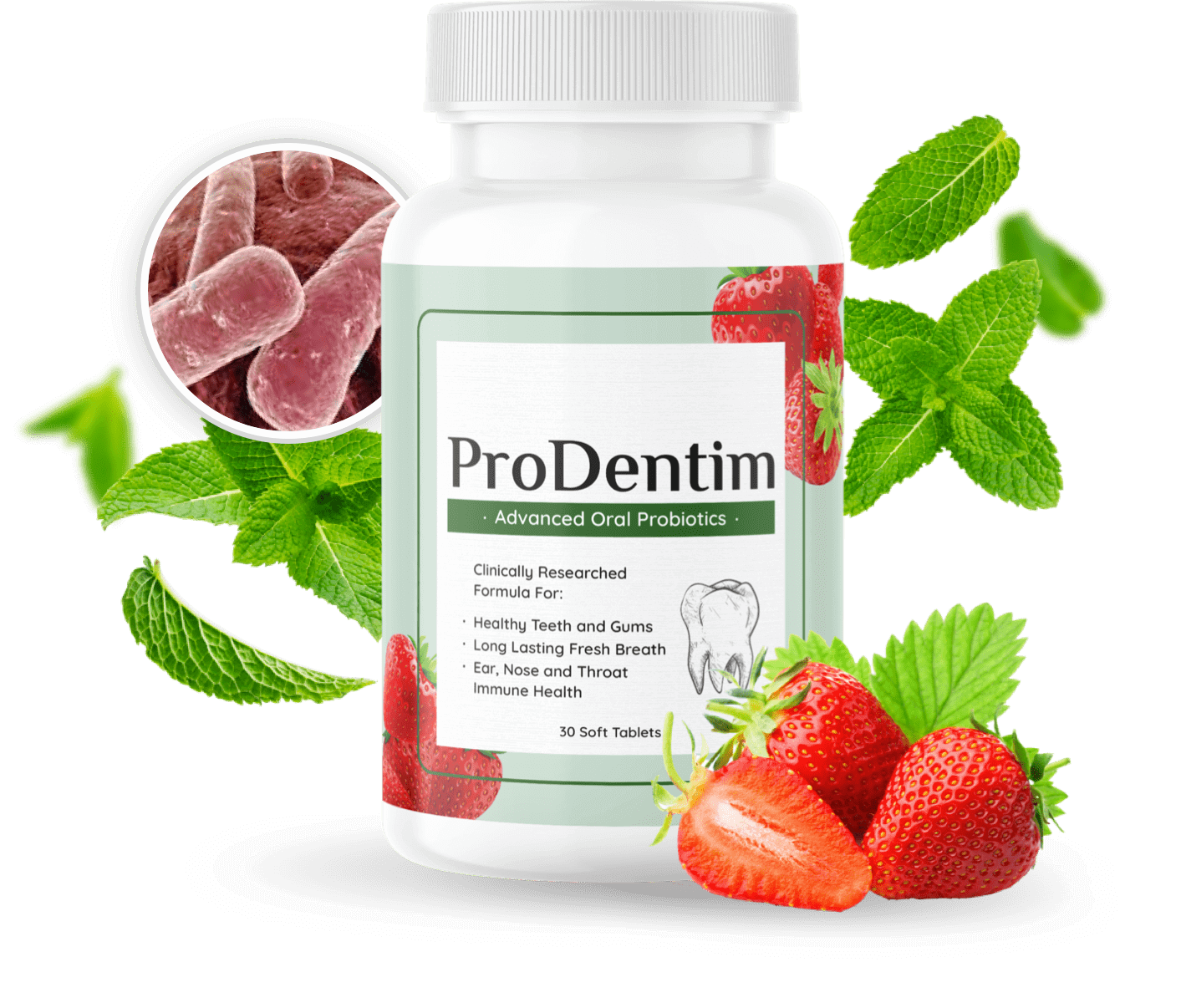
Clinical Recommendation
ProDentim: Oral Probiotics Clinically Formulated for Gum Health
ProDentim delivers 3.5 billion CFU of L. Paracasei, B. lactis BL-04®, and L. Reuteri — the three strains with the strongest clinical evidence for gum inflammation and oral microbiome rebalancing. It's the only formula we've reviewed that targets the bacterial root cause described in this article rather than masking the symptoms.
Disclosure: MD Clinical Reports earns a commission if you purchase through our links, at no extra cost to you. We only recommend products we have independently reviewed.