
You eat a reasonable lunch — maybe a sandwich, some fruit, a glass of juice. Forty minutes later, you can barely keep your eyes open. You reach for coffee. By 3pm, you want something sweet so badly it's hard to think about anything else.
This pattern has a name. It's not laziness, poor sleep, or low iron. It's a glucose spike followed by a crash — and it's happening inside your bloodstream every time you eat, whether you feel it or not. Over years, these spikes quietly damage the machinery that regulates blood sugar, accelerating metabolic aging faster than almost any other lifestyle factor.
What Actually Happens When Blood Sugar Spikes
When you eat carbohydrates — bread, rice, fruit, pasta, even vegetables — your digestive system breaks them into glucose, which enters the bloodstream. Your blood glucose level rises. The pancreas detects this and releases insulin, a hormone that signals cells to absorb the glucose for energy or store it as fat.
In a healthy, insulin-sensitive person, this process is smooth and measured. Blood glucose rises gently, insulin responds proportionally, and glucose returns to baseline within 1–2 hours. In someone with insulin resistance — which affects an estimated 40% of American adults, many of them undiagnosed — the cells don't respond efficiently to insulin. The pancreas compensates by releasing more and more insulin to force the response.
The result is a roller coaster: a steep glucose spike after eating, followed by an aggressive insulin-driven crash. The crash is what produces fatigue, brain fog, and intense carbohydrate cravings — your body interpreting low blood sugar as an emergency and demanding fast fuel. You eat again. The cycle repeats.
Clinical Insight
A 2021 study published in Nature Metabolism using continuous glucose monitors found that over 80% of participants — including those without diabetes — experienced clinically significant post-meal glucose spikes after standard meals. Most had no idea. The researchers concluded that glucose variability, not just fasting glucose, is a primary driver of metabolic aging.
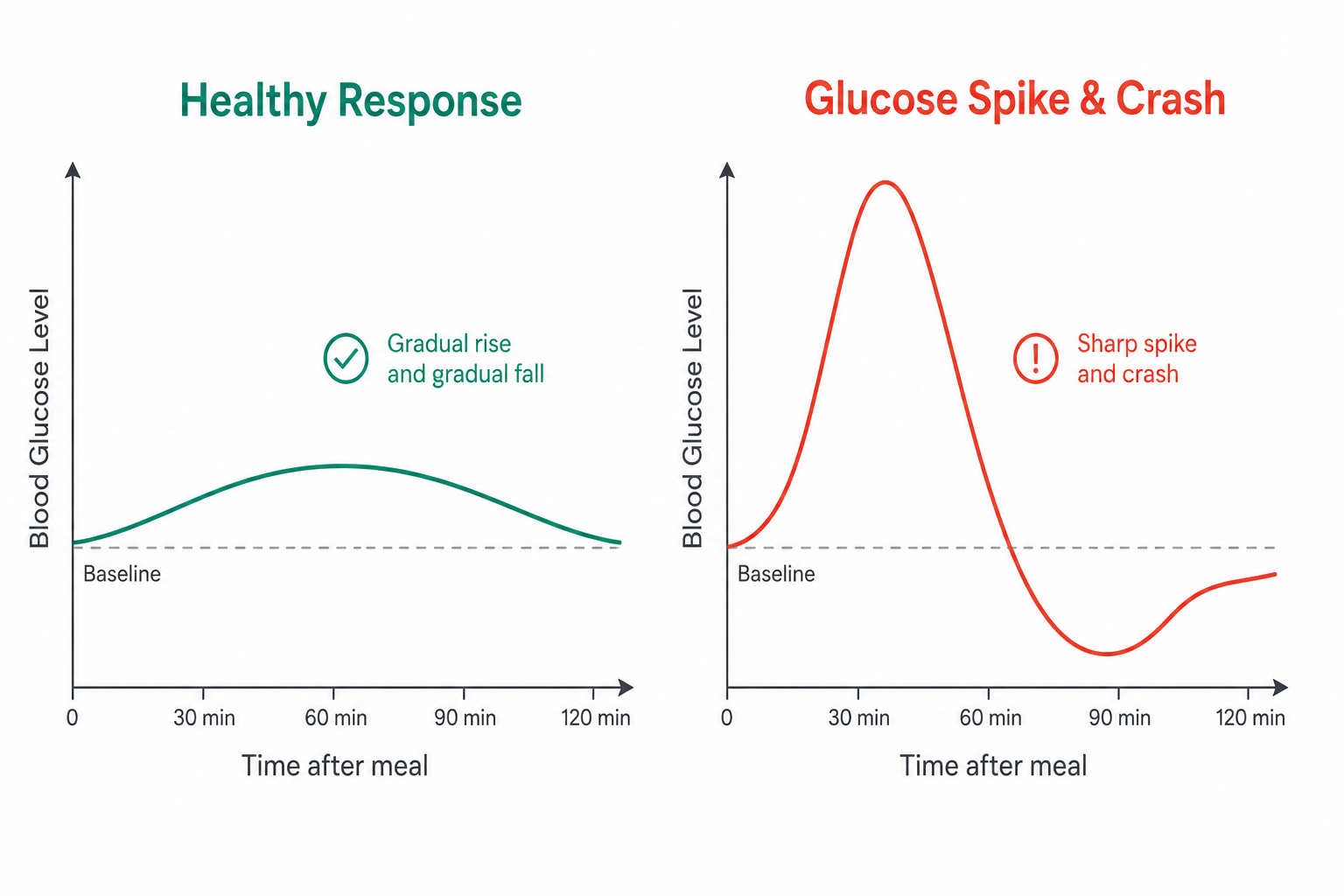
A healthy glucose response rises and falls gently. Insulin resistance creates sharp spikes and crashes — driving fatigue and cravings.
5 Signs Your Blood Sugar Is Spiking and Crashing Daily
Most people with blood sugar dysregulation don't know they have it because the symptoms are mistaken for other things. These are the most consistent warning signs:
Afternoon energy crash, especially after lunch
The classic post-lunch slump is overwhelmingly a glucose event, not a circadian one. If you need caffeine to function between 1–4pm most days, your post-lunch glucose spike is too sharp and the subsequent crash is knocking you down. This pattern is measurably more pronounced in people with early insulin resistance.
Intense cravings for sweets or carbs within 2 hours of eating
When blood glucose crashes after a spike, the brain registers a fuel shortage and triggers urgent carbohydrate cravings — specifically for fast-digesting sugars that will raise glucose quickly. This isn't a lack of willpower. It's a hormonal signal driven by metabolic dysregulation. Fighting it with willpower alone rarely works long-term.
Difficulty concentrating or brain fog after meals
The brain runs almost exclusively on glucose. When blood sugar swings wildly — up then down — neurons don't receive a steady fuel supply. The cognitive fog that descends after a spike-and-crash is real, measurable, and correlated with the severity of glucose variability. Stable blood sugar produces noticeably sharper cognition.
Hunger again 1–2 hours after a full meal
If you're physically hungry shortly after eating a full meal, insulin overshot — it drove blood glucose too low, signaling hunger before your body has actually used what you just ate. This overcorrection is a defining feature of insulin resistance and is distinct from appetite regulation or psychological eating patterns.
Difficulty losing weight despite eating less
Chronically elevated insulin — the body's response to repeated glucose spikes — keeps fat storage actively locked. Insulin is a fat-storage hormone; when it's elevated most of the day, the body is physiologically unable to access fat for fuel. This is why caloric restriction alone often fails when insulin resistance is the underlying issue.
6 Evidence-Backed Strategies to Flatten the Glucose Curve
You don't need to go low-carb or count every gram of sugar. These strategies work by changing how your body processes the carbohydrates you already eat:
Eat vegetables and protein before carbohydrates
The order in which you eat food matters as much as what you eat. A landmark 2015 study in Diabetes Care found that eating protein and vegetables first — before any carbohydrates — reduced post-meal glucose spikes by up to 37% compared to eating carbs first. The fiber and protein slow gastric emptying and blunt the rate of glucose absorption. You don't need to change what you eat — just the sequence.
Take a 10-minute walk immediately after eating
Muscle contractions during light exercise pull glucose out of the bloodstream independently of insulin — using a different cellular pathway called GLUT4 translocation. A 10-minute walk starting within 30 minutes of finishing a meal can reduce post-meal glucose peaks by 20–30%. This is one of the most powerful and accessible blood sugar interventions available, and it requires no equipment, no supplements, and no dietary changes.
Add apple cider vinegar before high-carb meals
One tablespoon of apple cider vinegar in a glass of water, consumed before a starchy meal, consistently reduces post-meal glucose peaks in multiple controlled studies. The acetic acid slows the activity of amylase — the enzyme that breaks starch into glucose — reducing the speed of glucose absorption. The effect is modest but real: studies show 20–35% reductions in peak glucose when vinegar precedes a carb-heavy meal.
Prioritize sleep — especially the first half of the night
A single night of poor sleep measurably reduces insulin sensitivity the following day — sometimes by as much as 25%. Cortisol, which is elevated with sleep deprivation, directly raises fasting blood glucose and impairs insulin receptor function. Consistent sleep of 7–9 hours is one of the most underrated metabolic interventions available. Fixing blood sugar without fixing sleep is building on an unstable foundation.
Replace refined grains with whole grains and legumes
White bread, white rice, and refined pasta have their fiber stripped out — fiber that slows glucose absorption. Swapping to whole grain versions, or replacing a portion of grains with legumes (lentils, chickpeas, black beans), measurably flattens post-meal curves. Legumes in particular have among the lowest glycemic responses of any carbohydrate source and provide protein and resistant starch that feeds beneficial gut bacteria.
Reduce liquid sugar entirely
Juice, soda, sports drinks, and sweetened coffee are the worst-case scenario for glucose spikes: sugar with no fiber, fat, or protein to slow absorption. A 12-ounce glass of orange juice produces a faster, higher glucose spike than a candy bar in many people. Switching to water, sparkling water, or unsweetened tea — even before any other dietary change — produces immediate, measurable improvements in daily glucose variability.
Why Targeted Blood Sugar Support Supplements Matter
Lifestyle changes create the foundation. But for people with established insulin resistance — or those who need faster results while they build new habits — specific plant compounds have robust clinical evidence for improving glucose metabolism at the cellular level:
Berberine
Activates AMPK, the same cellular pathway activated by exercise and metformin. Multiple meta-analyses show Berberine reduces fasting glucose and HbA1c comparably to first-line diabetes medications — without the gastrointestinal side effects. It's the most clinically validated natural blood sugar compound available.
Chromium picolinate
Chromium is a cofactor for insulin receptor signaling. Deficiency — common in diets high in refined carbohydrates — impairs insulin's ability to move glucose into cells. Supplementation restores receptor sensitivity and has demonstrated reductions in fasting glucose and insulin levels in multiple controlled trials.
Ceylon Cinnamon
Contains compounds that mimic insulin and improve GLUT4 expression in muscle cells. Distinct from Cassia cinnamon (common grocery store cinnamon) in both safety and potency. Studies using 1–3g of Ceylon cinnamon daily show consistent reductions in post-meal glucose spikes and fasting insulin.
Bitter Melon extract
Contains charantin and polypeptide-p, compounds that activate insulin receptors independently of insulin. Clinical studies in pre-diabetic populations show significant reductions in HbA1c after 12 weeks of consistent use — making it particularly relevant for people with already-elevated average glucose.

Clinical Recommendation
Gluco Armor: Blood Sugar Support Formulated for Metabolic Resilience
Gluco Armor combines Berberine, Chromium, Ceylon Cinnamon, and Bitter Melon extract — the four compounds with the strongest clinical evidence for reducing post-meal glucose spikes and improving insulin sensitivity. It's the formula we've reviewed that most directly addresses the cellular insulin resistance mechanism described in this article.
Disclosure: MD Clinical Reports earns a commission if you purchase through our links, at no extra cost to you. We only recommend products we have independently reviewed.