Can Receding Gums Grow Back Naturally? What Biological Dentists Aren't Telling You
You notice a twinge of sharp pain when drinking iced water, and in the mirror, your teeth seem noticeably longer. Traditional dentistry often jumps straight to expensive, painful surgical gum grafts — but new oral microbiology demonstrates a non-invasive cellular pathway.

Dr. Sterling, MD
Oral Microbiology & Periodontal Team · Published September 2026
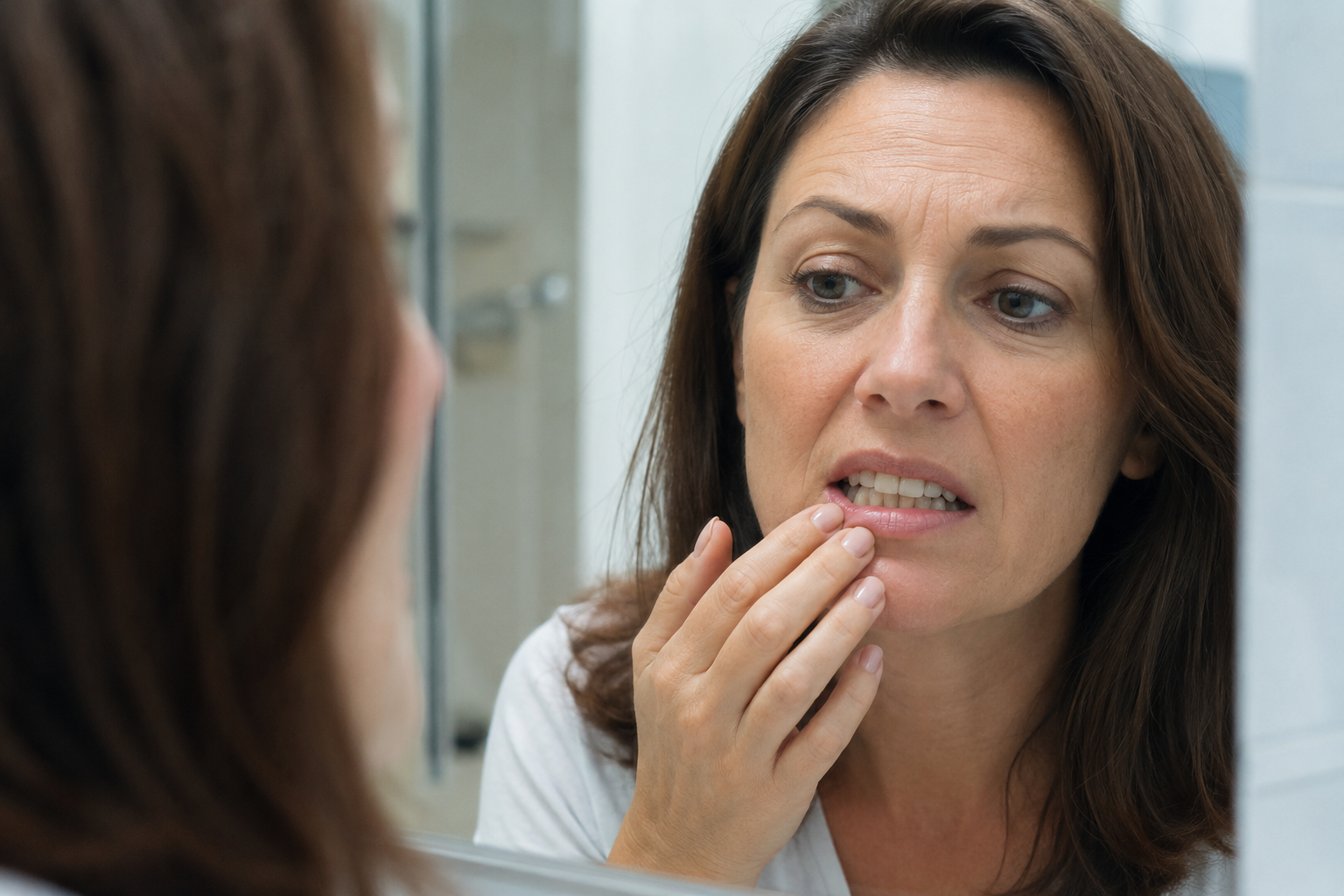
Receding gums expose sensitive root dentin, leading to nerve pain, aesthetic degradation, and tooth instability if left unchecked.
Gum recession (gingival recession) occurs when the margin of gum tissue surrounding teeth wears away or pulls back, exposing more of the tooth or the tooth's vulnerable root. Left unaddressed, it creates deep pockets where virulent anaerobic bacteria thrive, potentially destroying jawbone tissue.
The Paradox: Why Brushing Harder and Using Antiseptic Mouthwash Backfires
When individuals spot bleeding gums or receding margins, their immediate instinct is to brush aggressively and rinse with burning, alcohol-based mouthwashes. Clinical periodontics confirms this is one of the worst things you can do.
Standard mouthwashes are indiscriminate nuclear weapons for your oral cavity. They eliminate 99.9% of bacteria—including the vital beneficial commensal postbiotics that naturally protect your periodontal ligaments. Once the good bacteria are wiped out, aggressive toxins secreted by Porphyromonas gingivalis dissolve collagen fibers at triple the normal rate.
The Cellular Breakthrough: The FabM Enzyme & Oral Postbiotics
In 2024, researchers identified a specialized bacterial defense mechanism known as the FabM enzyme. In healthy mouths, beneficial probiotic colonies utilize FabM to construct an impermeable lipid barrier along the gingival margin.
How Oral Postbiotics Protect & Tighten Receding Gums:
- 1. Neutralize Bacterial Collagenase: Halts the destructive enzymes that dissolve the periodontal ligament and gum connective tissue.
- 2. Activate the FabM Barrier: Forms a microscopic biological seal that stops food debris and plaque acids from penetrating exposed root tubules.
- 3. Stimulate Gingival Fibroblasts: Floods the sulcus with essential micronutrients and postbiotic metabolites to firm up soft pink tissue around the teeth.
The Non-Invasive Approach to Periodontal Recovery
Rather than waiting for painful periodontal pocket surgery or $8,000 palate tissue grafts, biological dentistry advocates an oral microbiome restoration protocol:
- Repopulate with Chewable Postbiotics: Allowing beneficial strains to bathe the gums directly rather than swallowing pills that bypass the mouth.
- Switch to Soft-Bristle Micro-Brushing: Eliminating abrasive silica toothpastes that strip protective enamel and mechanically shear fragile gum tissue.
- Support Collagen Cross-Linking: Supplying targeted bioflavonoids and vitamins C and D3 to reinforce connective fiber reattachment.

DentaBiome: The World's First Clinical Oral Postbiotic Chewable
DentaBiome delivers targeted beneficial postbiotics directly to the gingival sulcus, activating the FabM defense enzyme, halting root recession, soothing bleeding margins, and restoring firm, healthy pink gums.